

Genuine Green Care
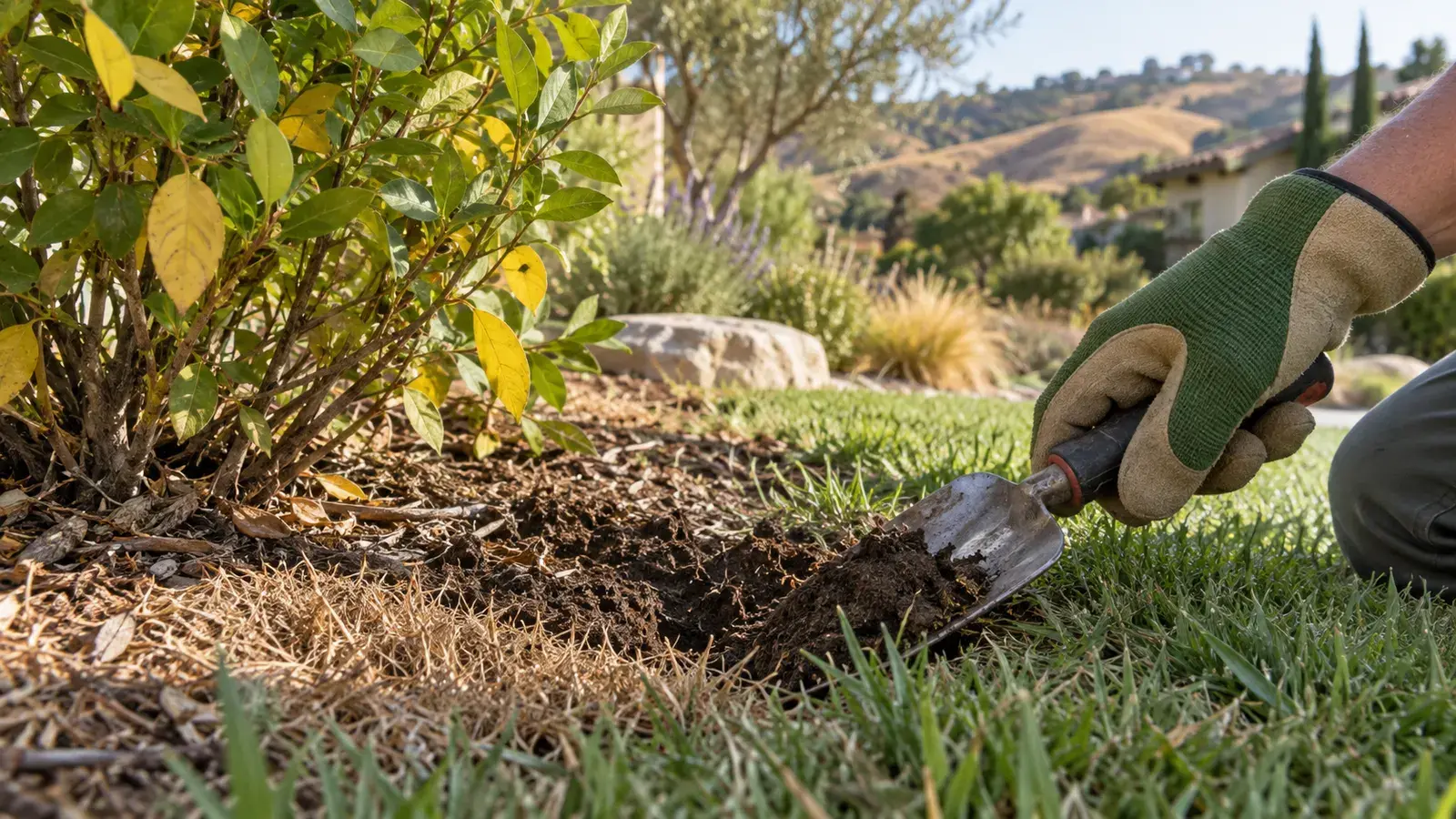
Gloved hand checking soil beside brown grass and a shrub with yellow leaves.
Back to Resources

How-to Guide

Brown Patches and Yellow Leaves: Is Your Yard Getting Too Much Water?

Brown patches and yellow leaves do not always mean a thirsty yard. Learn what to inspect before changing your watering schedule.

Genuine Green CareSeptember 12, 2026overwatering, brown patches, lawn problems
Gloved hand checking soil beside brown grass and a shrub with yellow leaves.

When a plant starts looking unhappy, turning up the water feels like the obvious solution. Sometimes it helps. Sometimes it makes the underlying problem worse.

Quick Answer

Do brown patches and yellow leaves always mean the yard is thirsty?

When a plant starts looking unhappy, turning up the water feels like the obvious solution.

Look before you add water

Pattern and soil tell you more than leaf color alone.

Whole lawn vs one zone vs one plant

The scale of the problem is a better starting point than color.

Soil below the surface

Compare moisture in the affected area with a healthier nearby area.

What happens during an irrigation cycle

Blocked heads, disconnected drip, runoff, or spots that stay wet after surrounding soil dries.

Timing

Did symptoms appear after a controller change, a hot spell, or work in a planting bed?

Begin with evidence. Is the problem affecting the whole lawn, one sprinkler zone, or a single plant? Did it appear after a controller change, a hot spell, or work in a planting bed? The pattern gives you a better starting point than leaf color alone. Check soil moisture below the surface in both the affected area and a healthier nearby area. Then observe an irrigation cycle. Look for a blocked head, a disconnected drip line, runoff, or an area that stays wet long after surrounding soil has dried. Drought-like symptoms can have other causes, including salts, insects, disease, and frost. That is why diagnosis matters before adding water. UC Agriculture and Natural Resources: Keeping Plants Alive Under Drought or Water Restrictions (https://anrcatalog.ucanr.edu/Details.aspx?itemNo=8553) For established lawns, UC recommends checking whether irrigation reaches the roots and is distributed evenly, rather than relying only on a timer setting. UC IPM: Lawn Watering (https://ipm.ucanr.edu/home-and-landscape/lawn-watering/) Take clear photos and write down what you find. Useful notes include when symptoms started, the current watering schedule, and whether the soil was wet or dry when you checked. If the cause remains unclear, those details make a professional assessment more productive. Resist changing watering, fertilizer, and pruning all at once. A measured approach makes it easier to learn what actually helps.

Sources

UC Agriculture and Natural Resources: Keeping Plants Alive Under Drought or Water Restrictions — https://anrcatalog.ucanr.edu/Details.aspx?itemNo=8553 UC IPM: Lawn Watering — https://ipm.ucanr.edu/home-and-landscape/lawn-watering/

Related services

Genuine Green Care can take these jobs off your weekend list.

Lawn Mowing & Maintenance

Consistent cuts, sharp edges, and a clean blow-off on a schedule you can trust.

Learn more →

Landscaping & Design

Plantings, beds, and outdoor upgrades planned for how you actually live outside.

Learn more →

Ready for a cleaner cut?

Contact Genuine Green Care to discuss problem areas and the right next step for your landscape.

Genuine Green Care

Ready to Schedule Service?

Ready for a cleaner cut? Request a quote or call during business hours.

Tags

overwateringbrown patcheslawn problemsTemecula